Friday, February 13, 2015

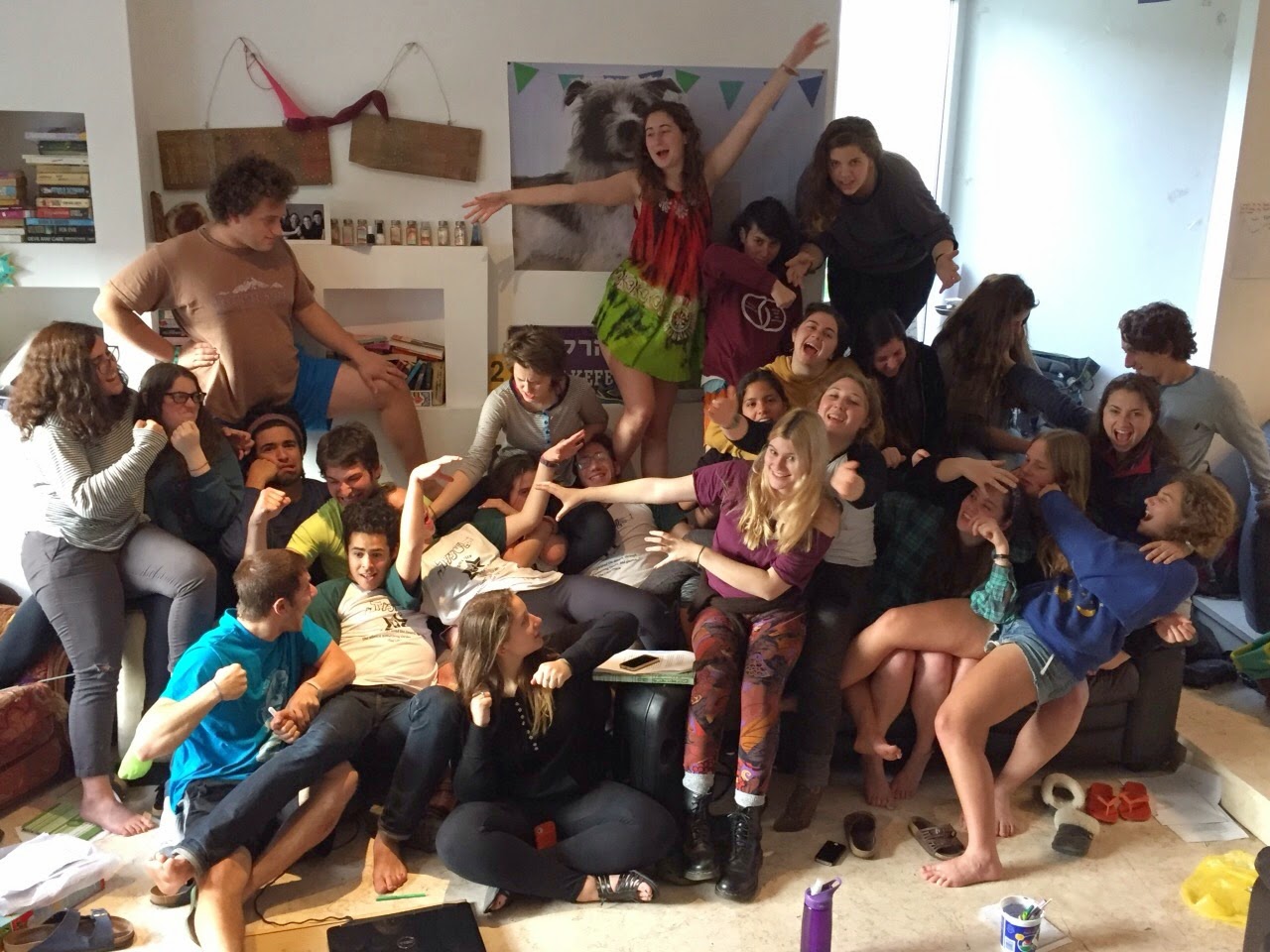
Kaveret Pictures and Upcoming Events

Next week, the Workshoppers will be very busy! Feb 15-17, we will be at Kibbutz Lochmei Hagitaot, for the second Poland preparation seminar. The seminar will take place in the museum, established by the leaders of the Warsaw Ghetto Uprising, and will focus on building a shared level of knowledge about the lead up and events of World War II and the Holocaust. On Friday the 20th, they will head to World Veida to meet their counterparts from South America, Australia, South Africa, New Zealand and Europe. There will be over 150 participants, debating about the future of Habonim Dror and voting on resolutions. Check back for updates about the seminar and veida!


Thursday, February 5, 2015

Weekly Schedule

Kaveret is well under way, and the Workshoppers have begun settling into messima. Each week, they head to messima Sunday, Tuesday and Wednesday. Mondays, they have Yom Kvutza with their Idani and Phia, where they continue with the learning, group processing and social activities that they started on Boneh. On Thursdays, they have Yom Kaveret with their Kaveret Rakazim, Jo, Reut and Zev. Yom Kaveret is made up of modules focusing on different aspects of Israeli society, in order to complement and explore what they are experiencing in messima and living in Rishon Letzion. They will also be going on siyurim (tours). Those of them that choose are also continuing with weekly Hebrew classes. 


Monday, January 26, 2015

Reflections from Ofek


When I was little, my stepdad would tell me stories about his time on kibbutz. He would tell me about rising with the sun to work in the fields or in the reffet with the cows. I grew up with this image of labour that was romantic and beautiful. As I grew up and started going to machaneh, I began learning about the chalutzim. I began to gain more of an understanding of what it meant to say that this movement was progressive labour Zionist. When I was preparing for workshop, I would never have pictured doing something like working in the mataim. I got excited for avodah on Ein dor only to realize that avodah meant waking up at 8:30 to fold laundry, not that it wasn't a good experience. So when I heard that this was one of the options for ofek I felt excited. I was finally going to understand the stories from my childhood and hopefully connect to the movement in new ways. It has definitely lived up to my expectations. From this experience I've gained a new sense of what it means to whipe sweat from your brow after a hard day work. But it's also been about the end of the day, when we are all hanging out together. That has been so extremely special to me. I hope this program will be continued for future workshops. I believe everyone finds a different way of connecting and each of the ways are important and valuable lessons for life. I can't wait to share this with my parents, my chanichim, and my kvutzah.

-Maya Asulin, Kibbutz Ravid Ofek Track


Kaveret Messima

My apologies for the delayed postings. Please check back later this week for more posts finishing off events from December, but for now let's catch up with the Workshoppers at messima!

What is messima? Messima means "mission" in Hebrew. In Habonim Dror, we view our volunteer projects as long term missions within Israeli society, working through education to create a just and equal Israeli society. Teaching English is the method we use to connect with Israeli youth and create a fun place for them to be, and to open a conversation about values, their life in Israel, and empowering them to shape Israeli society in the future. We work in partnerships with Hanoar Haoved v'Halomed, our sister movement in Israel, and with different municipalities. Today, we are active in Rehovot, Bat Yam, Yafo, Rishon Letzion, Acco, Haifa, Kfar Manda, Carmiel, Iblin, Deir Al Assad and Sachnin. Although there are some changes from year to year based on demographic changes within the messimot, our projects are ongoing, long-term relationships with the schools and organizations where we are active. The impact of the Workshoppers and other Habonim Dror chanichim that do messima in these places over the years is truly incredible, and today some of them rely on us to continue their activites. Each messima also has a melaveh (escort/guide) that runs weekly tzevet meetings where the Workshoppers can process their experience and sharpen their hadracha (leadership) skills. This is an important place for the Workshoppers to connect their experiences in Israel to their ideological questions, about Israel, being Jewish, and being a leader in Habonim Dror.

Tel Aviv Merkaz - Ari, Johanna, Nora and Rayna are working with chanichim that live in Central Tel Aviv. They work at schools in the morning, running fun, educational activities and teaching English. In the afternoon they are madrichim in the Hanoar Haoved veHalomed ken, leading their own group of chanichim and helping out other madrichim as well.

Tel Aviv Hadorban - Ilani, McKayla, Naomi and Shira are involved with kids from the South Tel Aviv neighborhood, typically from a lower economic backgrounds. South Tel Aviv is a mixed neighbourhood, and mnay of their chanichim are not Jewish and are children of refugees that fled to Israel. They are madrichim in the ken and work with the other madrichim to lead several different groups of chanichim.

Yafo - Isaiah, Erin, Maya, Tom, Ariana and Kaela are involved in educational projects in Yafo. In the mornings they work in the English projects and classes of an Arab middle school/high school in Yafo. After school, they split to two different locations. One group works in the nearby Hanoar Haoved veHalomed ken leading a group of mixed Arab-Israel and Jewish-Israeli chanichim. The other group goes to the Kiyum Meshutaf Ken to work with Arab-Israeli chanichim only, running an English program and other educational activities.

Havatzelet (Rehovot) - Netanya, Frenchie, Elana and Jack are working with chanichim from Chavatzelet, a neighborhood in Rehovot. They work with kids in schools in the morning, both in English classes and in other educational activities. In the afternoon they are madrichim at the Hanoar Haoved veHalomed ken, where they are responsible for a kvutzah of chanichim and help other madrichim with their chanichim as well.

BAMA in Rishon - Shosh, Cliel, Emilia, Jake and Mia are working in the city of Rishon Letzion itself. In the mornings they help kids in school with their English classes and homework. In the afternoon they are madrichim at the Bayit Lemadah v'Emdah (House of Science and Stance) in Rishon Letzion, an after-school program that offers younger kids a place learn and grow through experiential education and fun activities. The kids that attend this program are generally between the ages of 8 and 12, and come from a lower socio-economic background. The BAMA is part of a network of after-school centers supported by local municipalities that provide a safe, educational place for children to get a snack and help with their homework.

Bat Yam - Leah, Eli, Patty, Tali, and Ronnie are assisting in a school in Bat Yam, made up largely of children of Russian immigrants from a lower socioeconomic background. The Workshoppers come to the schools to bring educational activities and English programming to the students, and invite them to the afternoon activities in the ken. In the Hanoar Haoved ve'Halomed ken in the afternoon they lead with other madrichim and bring the kids interactive and fun activities, and help them form a social group of their own.

Thursday, December 25, 2014

History of Habonim Hagshama Seminar

The past four days, the Workshoppers were travelling around the Galil, learning about the history of Habonim Dror in Israel. We started at Hatzer Kinneret, the first training farm of the 2nd Aliyah (1909-1914) for the chalutzim (pioneers), who later went on to establish the first Kibbutzim. After a visit to the Kinneret Cemetery, where important ideological thinkers and leaders, as well as kibbutz members, are buried. The Workshoppers had a chance to see the graves of Moshe Hess, Nachum Syrkin, Beryl Katzenelson and the poet Rachel. Afterwards, they visited Muki Tzur, a historian of the Second Aliyah and a former shaliach to Habonim North America. The Workshoppers continued the next day with visits to some of the earlier kibbutzim established by Habonim: Kibbutz Kfar Hanasi, Amiad and Yizrael. After learning about some of the processes of change that have occurred in the Kibbutz movement, the Workshoppers were left questioning what the role of Habonim is in pioneering Israel today. On Tuesday, they visited some bogrim (graduates) of Habonim who were part of Kibbutz Mishoal, the largest urban kibbutz in Israel. Finally, they finished the week of by meeting some of the newest graduates of Habonim to make aliyah and live in collective frameworks in Haifa. All in all, it was a challenging and inspiring week learning about, and questioning, the role of Habonim Dror in Israel.


Discussing the difficulties faced by the chaluztim at the grave of someone who committed suicide..


Totally fascinated by the life of Rachel, the poet of the Second Aliyah.


Meeting historian, former Mazkir of the Kibbutz Movement, and founder of Bina Muki Tzur.


Lighting candles with the families of Kibbutz Mishoal, the largest urban kibbutz in Israel.

Wednesday, December 17, 2014

Ofek: Tiyul in the Negev

Our final group for Ofek, Naomi, Shosh, Mia, Jack, Ilani and Eli spent five days hiking in the Negev. With the support of Ido, the British workshop madrich, they planned and ran the tiyul almost entirely on their own. During the preparation days, they learned how to navigate, including a practice navigation test throughout Rishon Letzion, planned their menu, planned fun activities, set goals for themselves and learned about safety on tiyulim. They also discussed their relationship to nature and watched the movie "Into the Wild." On Wednesday morning early, they headed down to begin hiking at Sde Boker. Over five days, they hiked over 60 kilometers through the desert. They overcame a lot of challenges, including a rainstorm in the middle of the night, with an amazingly positive attitude  and really enjoyed the time they spent together. The experience levels in the group varied significantly, but they met all of their challenges as a group and supported each other. It was an incredible experience, and for many of them the highlight of the year thus far.


Wednesday, December 10, 2014

Ofek: Bina Secular Yeshiva in Tel Aviv

The Workshoppers studying at Bina are Nora, Maya, Tali, Ari, Netanya, Shira, Cliel, Micaela, Erin and Rayna. Bina is a secular yeshiva, founded with the mission of connecting Israelis and Jews to Judaism in a non-religious environment. Using traditional methods of Jewish study, such as text analysis and chevruta (pair-based learning), Bina educators ask their students not only why Judaism is relevant to their lives, but also seeks to establish a basis of knowledge in Jewish texts and ritual.

Workshoppers are taking classes in Jewish philosophy, Talmud, Shabbat and Chaggim, Tanach and some special topic lectures. In between classes, their madrichim are also running activities, movie nights, and projects to connect their learning at Bina to their role as madrichim in the movement.

Some of their classes are siyurim of Tel Aviv, themed around different topics. On Sunday, their first day, they had a siyur of Rothschild Boulevard, about the founding of Tel Aviv.


Examining a model of the original settlement of Tel Aviv, in Migdal Shalom.


The mosaic of the founding of Tel Aviv, also in Migdal Shalom.

On Tuesday, they had a siyur of Yafo, about the Book of Jonah, as a complement to their Tanach studies. 


The whole Bina group with Elliot, their educator for the day.